Single-phase Relay Protection Tester

Send Inquiry
Single-phase Relay Protection Tester
Details
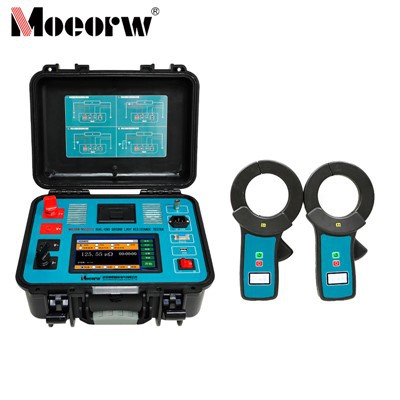
Advanced power supply technology with flexible output requirements is used by the MEJB-WVH Single-Phase Relay Protection Calibrator. Measurement, timing, and reclosing operations are among the crucial aspects of different relays that it precisely evaluates. It is a perfect calibration tool for power relay protection departments because of its straightforward use and dependable safety.
Category
Relay Protection Tester
Share to
Description

Single-phase Relay Protection Tester


Product Introduction


The MEJB-WVH Single-Phase Relay Protection Calibrator is a new-generation calibration device successfully developed by our company. The AC/DC voltage and current sources within this instrument employ the latest power supply technology, enabling it to achieve advanced domestic standards in circuit design, component selection, panel layout, and internal structure. Featuring comprehensive functionality, premium material selection, clear test data presentation, and straightforward operation, this instrument is the preferred equipment for power relay protection departments.


Product Parameter (specification)


2.1 Operating Conditions

(1) Power Supply

AC 220V ±10%, 50Hz

(2) Operating Environment

Temperature;-10°C to 40°C

Humidity;≤85%

(3) Atmospheric Pressure

86 to 106 kPa

2.2 Output Power

(1) AC Voltage

0–250V/3A

(2) AC Current

0–100A/7.5V

0–20A/25V

0–5A/5V

(3) DC Voltage

0–250V/3A

(4) DC Current

0–20A/25V

(5) Constant Voltage Output

DC24V DC48V DC110V DC220V

2.3 Performance Specifications

(1) Current/Voltage Meter

4½ digits

(2) Digital Millisecond Meter

0–99.9999s

2.4 Functions

(1) Relay Measurement

Measures starting values, return values, and return coefficients of current/voltage relays.

(2) Time Relays

Measures pickup values, dropout values, and operating times.

(3) Intermediate Relays

Measures pickup values, dropout values, holding values, and operating times for various intermediate relays with pickup coils and holding coils.

(4) Reclosing Relays

Performs capacitor charging tests, measures charging times, reclosing times, and tests intermediate elements.

(5) Differential relays

Capable of performing DC excitation tests, braking characteristic tests, and volt-ampere characteristic tests.

(6) Other various non-standard relays.


Product feature and application


1. Technologically Advanced:

Uses the most recent AC/DC power supply technology, with circuit and component designs that meet advanced domestic requirements. Data accuracy is guaranteed by high-precision millisecond clocks and 4½-digit digital meters.

01

2. All-inclusive Functionality:

Compatible with different types of relays, such as differential, measurement, time, intermediate, and reclosing. allows for multi-dimensional testing that includes operation times, release values, and pickup values.

02

3. Adaptable Output:

DC voltage 0–250V, 0–20A; AC voltage 0–250V, 0–100A. includes DC 24V, 48V, 110V, and 220V continuous outputs to satisfy a variety of needs.

03

4. User-Friendly Operation:

Offers standardized wiring, simplified processes, an easy-to-understand panel layout with knob and button controls, and digital displays and indication lights.

04

5. Safe and Reliable:

Uses premium materials for improved stability, operates in a broad temperature range of -10°C to 40°C, and incorporates protective measures like short-circuit and overload alarms.

05


Prodection details


Standard Relay Test Scenario: Suitable for routine calibration of measuring relays (current/voltage type), time relays, and intermediate relays (including start and hold coil types) by power protection departments and maintenance units. Measures key parameters such as pick-up values, reset values, reset coefficients, hold values, and operating times.

Specialized Relay Testing Scenario: For core power equipment paired with reclosing relays (e.g., DH-3 type), performs capacitor charging tests, charging time measurements, reclosing time tests, and intermediate element inspections. For differential relays (e.g., BCH-1 type), conducts specialized tests including DC excitation, braking characteristics, and voltage-current characteristics to meet periodic maintenance requirements specified in standards.

Special relay adaptation scenarios: Compatible with calibration requirements for various non-standard relays in power systems, supporting performance testing of different relay specifications and models.

Operating environment adaptability: Suitable for temperatures ranging from -10°C to 40°C, humidity ≤85%, and atmospheric pressure between 86-106 kPa. Meets relay testing needs across multiple scenarios, including indoor laboratory calibration and on-site power maintenance, serving as a core calibration device for power relay protection departments and power operation and maintenance enterprises.


Company Qualifications


FAQ

1)Our organization utilizes multiple relay types, including standard current and voltage relays, intermediate relays with holding coils, and specialized differential relays. Can this instrument comprehensively test all these types?

Answer:
The instrument's testing range fully covers all relay types mentioned without requiring additional specialized equipment. Specific compatibility details are as follows:
Conventional Relays: Fully supports current and voltage measurement relays, enabling precise measurement of pickup values, release values, and release coefficients. Time relays' pickup values, release values, and operating times can also be directly tested.
Intermediate relays with holding coils: Not only can it measure pickup values, dropout values, and operating times, but it can also specifically test the "minimum holding value"-by supplying constant voltage to the coil via the instrument's output, then adjusting the current to the minimum value required to maintain the relay's engagement after operation.
Differential relays: Taking the BCH-1 model as an example, it can perform required tests such as actuator parameter verification, voltage-current characteristic tests, and braking characteristic tests (requiring external voltage regulators and current boosters). It also supports core performance testing for other specialized differential relay specifications and accommodates calibration needs for various non-standard relays.

2)How difficult is the instrument to operate? Our operators only have basic electrical knowledge. Do they need professional training to get started?

Answer:
The instrument is designed for "simple operation." Operators with basic electrical knowledge can quickly master it without professional training. Key advantages include:
Intuitive Panel: All functions are clearly zoned. Core knobs like Output Selection (T1), Constant Output Adjustment (T2), and Contact Status Selection (T3) feature clear labeling. Real-time status feedback is provided via Current/Voltage Display (X1), Millisecond Timer (X2), and Output Type Indicators (ACV/ACA, etc.), eliminating the need for specialized judgment.
Streamlined Process: All output operations follow a three-step procedure: "Select Range → Close Switch → Adjust Magnitude." When measuring critical parameters like relay trip values or timing, operators can determine status by connecting wires per the manual and monitoring the action indicator light. The correspondence between switch positions and contact states is simple and easy to remember (I/IV Range: "Close → Open"; II/III Range: "Open → Close").
Guidance Support: The manual provides specific wiring diagrams (e.g., for intermediate relays, differential relays) and operational steps for various relay types. Combined with intuitive indicator feedback, operators can complete testing by following the manual without additional technical expertise.

3)During field testing, moving the instrument may be necessary. How does the device prevent damage from improper wiring or operation? Is routine maintenance complex?

Answer:
The instrument incorporates targeted designs for safety protection and routine maintenance, minimizing field usage risks with extremely low maintenance costs:
Safety Protection:
Short-circuit protection: Explicitly prohibits short circuits between output power sources and between contact terminals and output power sources. Internal fuse holders are configured; in case of overload or short circuit, simply replace the fuse with the same model to restore functionality, preventing damage to core components.
Operational Safety Alerts: Power must be turned off when connecting or disconnecting wires. External power sources must not be connected to contacts during measurement of action times, eliminating safety risks through operational procedures.
Overload Warning: "Do not exceed rated current" is clearly marked during DC current adjustment to prevent instrument damage from misoperation.
Daily Maintenance:
No complex upkeep required. Simply ensure a 5–10 minute warm-up period before testing (to guarantee measurement accuracy).
If the instrument malfunctions, first inspect the fuse holder-replacement requires no specialized tools. For non-fuse issues, contact manufacturer support directly. Do not attempt disassembly or repairs yourself. Low maintenance costs and minimal difficulty.


Hot Tags: single-phase relay protection tester, China single-phase relay protection tester manufacturers, factory, Six Phase Relay Protection Tester, 9 phase Microcomputer Relay Protection Tester, relay protection tester, There Phase Relay Protection Tester, 3 phase relay tester, Handheld Optical Digital Relay Protection Tester

Send Inquiry