


Partial Discharge Test Equipment
Full‑Series Partial Discharge Detector for MV & HV Power Equipment Insulation Testing & On‑site Inspection

01
15+
Years of R&D Experience

02
6000+
Completed Project Cases

03
CE/ISO
Full Export Certifications

04
98.5%
Project Acceptance Rate
-
![750kV Partial Discharge-Free AC Withstand Voltage Test System]() 750kV Partial Discharge-Free AC Withstand Voltage Test Sy...≤10pC Background NoiseGuarantees absolute test accuracy under 750kV compliant with IEC 60270.1/Q Power Capacity RequirementLowers input power to 1/30–1/50; runs directly on standard 380V grid.6-Fold
750kV Partial Discharge-Free AC Withstand Voltage Test Sy...≤10pC Background NoiseGuarantees absolute test accuracy under 750kV compliant with IEC 60270.1/Q Power Capacity RequirementLowers input power to 1/30–1/50; runs directly on standard 380V grid.6-Fold -
![220kV Containerized PD-Free AC Resonant Test System]() 220kV Containerized PD-Free AC Resonant Test SystemSystem self-PD ≤ 10pC – no background noise subtraction requiredFiber-optic isolation on HV side – counterattack overvoltage does not damage the control cabinetSeries/parallel reactor combination –
220kV Containerized PD-Free AC Resonant Test SystemSystem self-PD ≤ 10pC – no background noise subtraction requiredFiber-optic isolation on HV side – counterattack overvoltage does not damage the control cabinetSeries/parallel reactor combination – -
![All-in-One PD Tester for Factory QA | Handheld Live-Line Partial Discharge Detector]() All-in-One PD Tester for Factory QA | Handheld Live-Line ...Battery-powered all-in-one PD tester for factory QA & onsite testing. Fully compliant with IEC 60270. Direct factory price with global shipping. Request a free quote now!
All-in-One PD Tester for Factory QA | Handheld Live-Line ...Battery-powered all-in-one PD tester for factory QA & onsite testing. Fully compliant with IEC 60270. Direct factory price with global shipping. Request a free quote now! -
![Non-Contact Ultrasonic Partial Discharge Detector Calibration System]() Non-Contact Ultrasonic Partial Discharge Detector Calibra...🎯 100% Automated Testing | Hands-Free Calibration📜 Industry-Standard Compliant | Audit-Ready Word Reports🔧 6-in-1 Complete Rig | Multi-Functional Verification
Non-Contact Ultrasonic Partial Discharge Detector Calibra...🎯 100% Automated Testing | Hands-Free Calibration📜 Industry-Standard Compliant | Audit-Ready Word Reports🔧 6-in-1 Complete Rig | Multi-Functional Verification -
![PD Test Bench With Fast Pulse & Sine Signal Generator]() PD Test Bench With Fast Pulse & Sine Signal GeneratorOne-Click 100% Automated CalibrationExact Pulse Precision (≤5ns Ultra-Fast Rise)Dual-Standard Ready & Instant Word Reports
PD Test Bench With Fast Pulse & Sine Signal GeneratorOne-Click 100% Automated CalibrationExact Pulse Precision (≤5ns Ultra-Fast Rise)Dual-Standard Ready & Instant Word Reports -
![Automated Calibration System For UHF Partial Discharge Detectors]() Automated Calibration System For UHF Partial Discharge De...1. 4GHz Bandwidth & 300ps Ultra-Fast Pulse: Ensures traceable, laboratory-grade calibration precision for global UHF PD detectors.. 2. One-Time Wiring & Full Automation: Integrated smart switching
Automated Calibration System For UHF Partial Discharge De...1. 4GHz Bandwidth & 300ps Ultra-Fast Pulse: Ensures traceable, laboratory-grade calibration precision for global UHF PD detectors.. 2. One-Time Wiring & Full Automation: Integrated smart switching -
![Contact Acoustic Emission (AE) PD Detector Calibration System]() Contact Acoustic Emission (AE) PD Detector Calibration Sy...• Fully Automated Calibration: One-click automated sweep & testing (20kHz-200kHz) for GIS & Transformer PD detectors via smart software control. No manual calculation needed!• State Grid &
Contact Acoustic Emission (AE) PD Detector Calibration Sy...• Fully Automated Calibration: One-click automated sweep & testing (20kHz-200kHz) for GIS & Transformer PD detectors via smart software control. No manual calculation needed!• State Grid & -
![Ultrasonic Partial Discharge Detector]() Ultrasonic Partial Discharge Detector30m Non-Contact Detection with Live-Line Operation20-150kHz Ultrasonic Band, Unaffected by Ambient NoiseGPS Coordinates + Waveform + Photo Auto-Binding for Traceable Inspection Records
Ultrasonic Partial Discharge Detector30m Non-Contact Detection with Live-Line Operation20-150kHz Ultrasonic Band, Unaffected by Ambient NoiseGPS Coordinates + Waveform + Photo Auto-Binding for Traceable Inspection Records -
![HV Equipment Partial Discharge Test Instrument]() HV Equipment Partial Discharge Test Instrument8 independent synchronous channels, 70% higher mass testing efficiencyUltra-high sensitivity 0.01pC, ±3% low linear error compliant with dual standardsMulti-layer hardware & software
HV Equipment Partial Discharge Test Instrument8 independent synchronous channels, 70% higher mass testing efficiencyUltra-high sensitivity 0.01pC, ±3% low linear error compliant with dual standardsMulti-layer hardware & software -
![Gas-Insulated Tank Type PD-Free Power Frequency Tester]() Gas-Insulated Tank Type PD-Free Power Frequency TesterDesigned for GIS, cables and HV components, our MOEORW-WPi60 gas-insulated test system achieves ultra-low ≤1Pc background partial discharge for precise detection. Fully sealed SF6 structure ensures
Gas-Insulated Tank Type PD-Free Power Frequency TesterDesigned for GIS, cables and HV components, our MOEORW-WPi60 gas-insulated test system achieves ultra-low ≤1Pc background partial discharge for precise detection. Fully sealed SF6 structure ensures -
![4-channel Digital Partial Discharge Comprehensive Analyzer]() 4-channel Digital Partial Discharge Comprehensive AnalyzerProduct Introduction MOEORW-WPS40 is a compact digital partial discharge comprehensive analyzer controlled by remote PC via TCP/IP network. It is specially used for quantitative PD test of
4-channel Digital Partial Discharge Comprehensive AnalyzerProduct Introduction MOEORW-WPS40 is a compact digital partial discharge comprehensive analyzer controlled by remote PC via TCP/IP network. It is specially used for quantitative PD test of -
![Integrated PD Comprehensive Analyzer]() Integrated PD Comprehensive AnalyzerThis is an integrated partial discharge comprehensive analyzer with strong anti interference performance. It supports one key calibration and complete data analysis and report export. It is ideal for
Integrated PD Comprehensive AnalyzerThis is an integrated partial discharge comprehensive analyzer with strong anti interference performance. It supports one key calibration and complete data analysis and report export. It is ideal for


What Is Partial Discharge (PD)
Partial discharge denotes non‑through discharge induced by local electric‑field distortion arising from insulation defects in high‑voltage equipment, including voids, cracks, metallic burrs, moisture ingress and surface contamination. Such discharge does not give rise to complete insulation breakdown, and the equipment may remain in short‑term service. It constitutes a typical symptom of latent insulation defects.
Hazards of Partial Discharge
Although the energy of individual discharge pulses is low and will not trigger immediate equipment failure, cumulative degradation of insulation occurs persistently:
1. High‑temperature effects and charged particles generated by discharge impinge directly on insulating media and cause material carbonization.
2. Ozone and nitrogen oxides formed via ionization exert chemical corrosion on insulation and propagate defect expansion.
3. Progressive deterioration of defects converts partial discharge into through‑going breakdown, further bringing about equipment flashover and short‑circuit faults, which may lead to power outages or even catastrophic equipment failure.
Partial discharge serves as the principal precursor to high‑voltage insulation failures.
Core Advantages of Partial Discharge(PD) Testing
Non‑destructive Live‑line Inspection
No damage to power assets. Support live equipment checking without power cut, widely used for substation daily inspection.
Early Warning of Hidden Faults
Catch invisible insulation defects long before breakdown occurs, avoid unexpected power‑off accidents.
Reduce Operation & Maintenance Cost
Realize predictive maintenance instead of blind overhaul, cut unnecessary spare‑parts and downtime loss.
Multi‑method Detection Solution
Ultrasonic, UHF, TEV, HFCT multi‑sensor options, adapt to different HV equipment and complex interference environment.
Core Advantages of Partial Discharge Testing

Select By Test Object
Power Cable: Choose Oscillatory Wave OWTS tester for cable PD test and defect location.
Switchgear / GIS: Ultrasonic PD tester plus TEV / UHF sensors for live inspection.
Transformer: Digital PD detector for multi‑channel precise spectrum analysis.

Select By Working Scenario
Field On‑site Check: Handheld portable PD detector for fast on‑site survey.
Factory / Lab Test: High‑precision digital PD detector for acceptance test.
Long‑term Monitoring: Online PD monitoring system with full set sensors.
Ultrasonic Partial Discharge Tester
Non‑contact ultrasonic acoustic emission PD detection. Suitable for live‑line site inspection. Capture ultrasonic signal generated by partial discharge, locate discharge source for switchgear, GIS, transformers and overhead insulators.
Key Features: Live working, no high‑voltage contact, strong anti‑interference, handheld portable design.
Digital Partial Discharge Detector
High‑precision digital PD measuring instrument with high‑speed AD sampling. Support PRPD / PRPS spectrum analysis, multi‑channel synchronous acquisition. Widely used in laboratory test, factory acceptance test and substation on‑site diagnosis.
Key Features: Digital filtering, multi‑sensor compatible, data storage & report output.
Oscillatory Wave Partial Discharge Tester (OWTS)
Damped oscillatory wave PD test system specially developed for XLPE power cables. Realize non‑destructive partial discharge test and defect location for MV/HV cables, cable joints and cable terminals.
Key Features: Cable‑oriented solution, defect positioning, comply with IEC 60060‑3 & IEC 60270.
Partial Discharge Sensor
Complete series PD sensors for portable inspection equipment and long‑term online PD monitoring system. Support separate supply for spare‑part replacement or project customization.
UHF Partial Discharge Sensor
TEV Partial Discharge Sensor
Ultrasonic / AE Acoustic Emission Sensor
HFCT High‑Frequency Current Transformer Sensor

All‑in‑one unit with six PD channels and multi‑parameter detection
AI‑powered mobile APP supports one‑click report output
Real‑time display for simple and efficient data analysis

Ultra‑high Sensitivity <0.01pC detection, 100MHz high‑speed sampling
Broad Test Compatibility 2‑channel, covers 6pF‑250μF capacitance range
Standard‑compliant Analysis IEC & GB standard, PRPD/PRPS & anti‑interference function
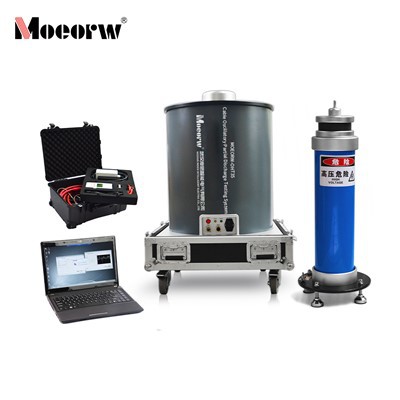
Non‑destructive Cable Testing For 10‑220kV cables, 1% defect location accuracy
High‑performance Output Peak 60kV voltage, max 5km test cable length
Efficient Field Operation <8s charging, portable for on‑site commissioning & diagnosis

Split‑core Live‑clamp Installation Clamp on grounding line, no wire disconnection required.
High‑sensitivity PD Detection Sensitivity<5pC, capture faint early‑stage discharge signals.
IP68 Harsh‑environment Resistance 96‑hour salt‑spray‑proof, stable for long‑term outdoor monitoring.
Application Scope


why choose us
Professional HV Manufacturer
Specialized in high‑voltage test instruments, rich project experience for power industry worldwide.
Full‑range PD Solutions
Cover portable tester, OWTS cable system, online monitoring and all supporting PD sensors.
Strong Anti‑interference Performance
Optimized algorithm for complex substation electromagnetic interference environment.
Complete After‑sales Service
Custom support, technical training, test report and 24‑hours online technical support.
FAQ
Q: What is the difference between ultrasonic PD tester and digital PD detector?
A: Ultrasonic PD tester focuses on on‑site live ultrasonic signal locating. Digital partial discharge detector supports multi‑sensor input and professional PD spectrum analysis for both lab and field.
Q: When should I choose oscillatory wave partial discharge tester?
A: OWTS is mainly used for non‑destructive partial discharge test and defect location of XLPE power cables, suitable for cable handover acceptance and aging assessment.
Q: Can I purchase partial discharge sensors separately?
A: Yes. We supply individual UHF, TEV, AE and HFCT PD sensors for spare part replacement and custom online monitoring projects.
As one of the most professional partial discharge test equipment manufacturers in China, we're featured by quality products and good price. Please rest assured to buy high quality partial discharge test equipment in stock here and get quotation from our factory. Customized orders are welcome.

