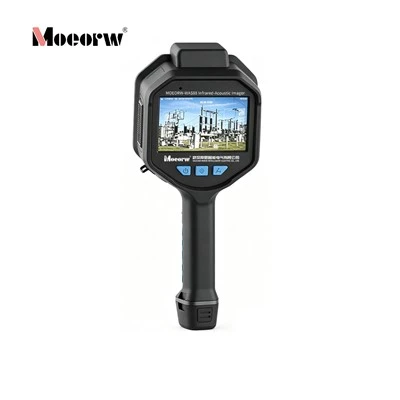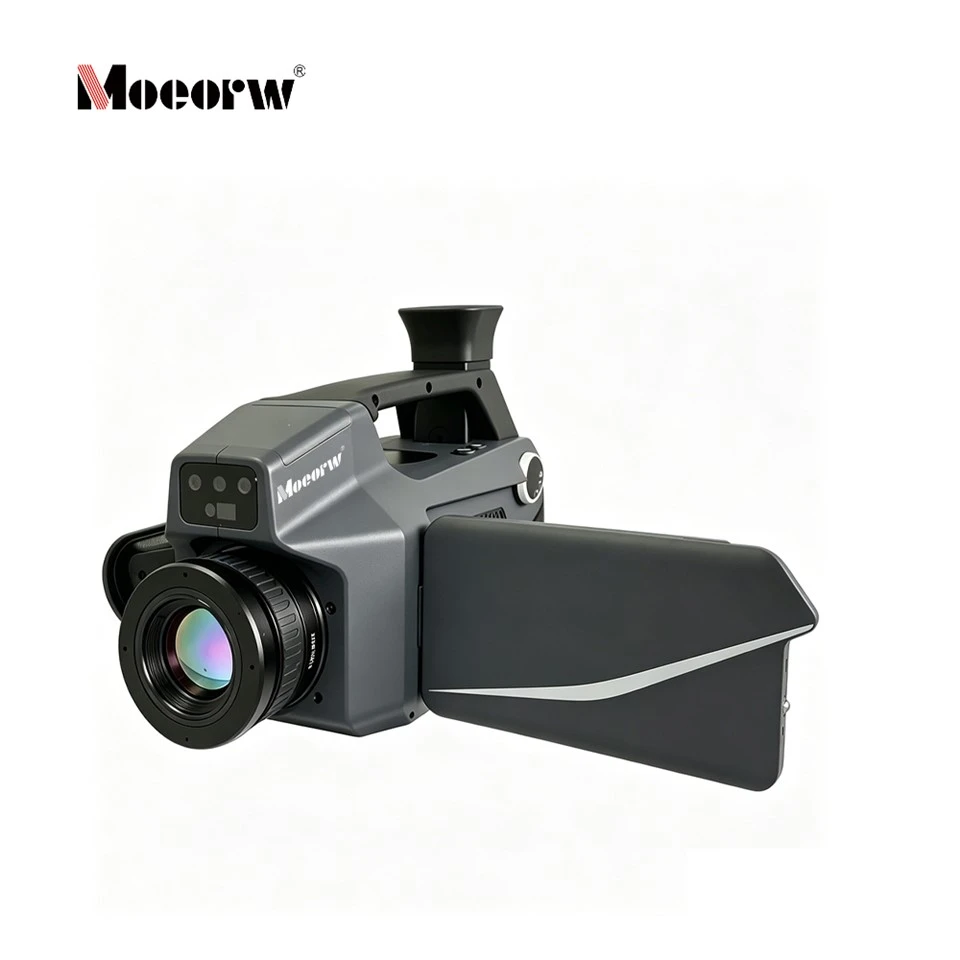
Product Overview
MOEORW-W530C is a precision infrared thermal imaging device dedicated to gas leakage inspection, integrated with infrared thermal detection, visible light imaging, laser ranging, digital temperature measurement and multimedia recording modules. The equipment adopts built-in refrigeration cooling infrared detector, supporting multi-mode image switching, multi-dimensional temperature analysis and adjustable temperature measurement ranges. It is equipped with Bluetooth, Wi-Fi, USB, HDMI and SD card storage interfaces to realize data storage, transmission and external display output.
The instrument is subject to strict factory calibration and requires annual re-calibration to maintain stable detection accuracy. Strict operation specifications and environmental restrictions apply to avoid permanent damage to core optical and electronic components; failures caused by improper operation are not covered by the official warranty. The device supports point, line and regional temperature analysis, 12-color palettes, 1–8× digital zoom, real-time video recording and image snapshot with audio annotation functions for comprehensive gas leak diagnosis and on-site data archiving.
Technical Specifications
|
Category |
Item |
Specification |
|
Core Imaging System |
Infrared Detector |
Refrigerated infrared detector (cooling time: 1–6 mins based on thermal state) |
|
Visible Light Module |
CMOS visible light camera |
|
|
Lens |
18-inch infrared lens |
|
|
Image Modes |
IR, CCD, HSE gas enhancement, TR temperature overlay mode |
|
|
Color Palette |
12 switchable color scales |
|
|
Digital Zoom |
Continuous 1× to 8× magnification |
|
|
Temperature Measurement |
Standard Temperature Range |
-20 ℃ ~ +70 ℃ |
|
Optional Temperature Ranges |
70 ℃ ~ 150 ℃, 150 ℃ ~ 350 ℃ |
|
|
Analysis Functions |
Point temperature, line temperature, area max/min temperature analysis |
|
|
Correction Parameters |
Emissivity, distance, relative humidity, ambient temp, reflected temp, transmittance adjustable |
|
|
Physical & Operation Buttons |
Functional Keys |
Power, zero calibration, mode dial, laser control, fill light, ZOOM, M mode switch, back, photo/video, 5-way navigation key |
|
Auxiliary Modules |
LED fill light, laser ranging module, viewfinder with diopter adjustment |
|
|
Storage & Interfaces |
Local Storage |
Removable SD card for image/video storage |
|
External Ports |
12 VDC charging port, USB data transmission, HDMI video output, Bluetooth, Wi-Fi |
|
|
Power Supply |
Power Source |
Matching dedicated rechargeable battery; dedicated supporting charger |
|
Operating & Storage Environment |
Operating Temperature |
-20 ℃ ~ +50 ℃ |
|
Storage Temperature |
-40 ℃ ~ +70 ℃ (dry, ventilated, low electromagnetic field environment) |
|
|
Calibration Requirement |
Recalibration Cycle |
Annual factory calibration recommended |
Main Product Features
Hardware Configuration & Design
1.Dual-channel optical architecture integrating infrared thermal lens and visible CMOS camera, paired with laser ranging and LED fill light to adapt to low-light and complex field inspection environments.
2.Independent zero calibration button supports manual detector correction under IR mode; TR mode supports automatic or manual zero adjustment to eliminate thermal drift interference.
3.Multi-channel external expansion ports including SD card, USB, HDMI, Bluetooth and Wi-Fi, realizing offline storage, computer data export, external large-screen display and wireless Bluetooth audio connection.
4.Ergonomic multi-key layout with dedicated mode dial and 5-way navigation key to simplify mode switching, temperature analysis parameter adjustment and file preview operations.
5.Built-in rechargeable battery with dedicated 12 VDC charging interface; charging indicator distinguishes charging (red) and fully charged (green) status.
Detection & Temperature Measurement Performance
1.Three types of temperature analysis tools (point, line, region) are available; each analysis target supports independent modification of emissivity, detection distance and temperature reading mode to improve measurement precision.
2.Complete temperature correction parameter group, adjustable humidity, ambient temperature and reflected temperature to compensate environmental interference during on-site gas leak detection.
3.Three segmented temperature measurement gears cover low-temperature equipment, medium-temperature pipelines and high-temperature industrial facilities, adapting to diversified industrial detection scenarios.
4.HSE gas enhancement imaging mode optimizes gas leakage contrast identification, matching the core application demand of infrared gas leak inspection.
5.Continuous 1–8× digital zoom and 12 optional color palettes enhance the visibility of tiny temperature anomalies and micro gas leakage points.
Data Recording & Post-processing Value
1.Image snapshot function supports audio annotation after freezing frame to record on-site inspection remarks for traceable file management.
2.Real-time video recording with duration counter display for continuous dynamic monitoring of gas leakage changes.
3.Independent preview mode supports thumbnail browsing of stored media files, enabling secondary temperature analysis on captured images and playback of recorded videos.
4.System setting module supports temperature alarm threshold configuration, automatic power-off/screen-off timing, time calibration and SD card formatting for standardized long-term field operation.
Equipment Protection & Maintainability
1.Optical lens equipped with matching lens cap to prevent condensation and surface abrasion; specific operation guidelines for environmental temperature transition to avoid internal water vapor condensation on the detector.
2.Clear environmental usage limits to prevent overheating, low-temperature damage and direct strong light radiation to the infrared lens.
3.Modular battery compartment design for quick battery replacement during long-duration field inspections.
Application Fields
1.Petrochemical Industry: Pipeline valve gas leakage inspection, storage tank sealing performance testing, flammable gas pipeline daily patrol.
2.Natural Gas Transmission & Distribution: Urban gas pipeline leakage detection, pressure station equipment sealing inspection, underground pipeline hidden danger investigation.
3.Power Industry: High-voltage cabinet internal gas component leakage, transformer sealing inspection, power station auxiliary pipeline leak diagnosis.
4.Refrigeration & HVAC Industry: Refrigerant pipeline leakage inspection for central air conditioning, cold storage equipment sealing detection.
5.Industrial Manufacturing: Chemical workshop toxic and volatile gas leakage monitoring, production pipeline real-time safety inspection.
6.Energy Storage & New Energy: Hydrogen storage tank and hydrogen pipeline micro-leakage detection, battery compartment gas anomaly inspection.
Daily Maintenance Specifications
Optical Lens Maintenance
1.Cover the lens cap when the device is idle to avoid dust and direct sunlight radiation.
2.Use soft professional lens cloth only for cleaning; rough fabric is prohibited to prevent scratch damage to infrared optical coating.
3.When transferring between environments with large temperature differences, cover the lens cap and place the instrument in the new environment for sufficient adaptation before operation to prevent water condensation.
Power & Battery Maintenance
1.Only use factory-matched batteries and dedicated chargers; third-party power supplies are forbidden.
2.Check battery for liquid leakage or deformation before each startup to eliminate safety hazards.
Storage Environment
1.Store in cool, dry, ventilated space without strong electromagnetic interference; storage temperature must be maintained between -40 ℃ and 70 ℃.
2.Remove the battery if the instrument will not be used for a long time.
Periodic Calibration
1.Return the equipment to the manufacturer for professional calibration every 12 months to guarantee long-term temperature measurement accuracy and detection stability.
Operational Restrictions
1.Do not disassemble the housing or modify internal components without authorization; all maintenance work must be completed by official certified technicians.
2.Avoid direct laser beam irradiation to human eyes to prevent eye discomfort and injury.
3.Prohibit long-term exposure to direct sunlight in open high-temperature environments to prevent overheating damage to internal detectors.
FAQ
Q1: The device cannot power on after battery installation
A1: Verify battery residual power; fully charge if low. Check battery compartment metal contacts for dirt or deformation and clean accordingly. Replace defective batteries if required.
Q2: Temperature measurement results are abnormal and inaccurate
A2: Check lens surface for condensed water vapor and wipe dry. Allow thermal adaptation when switching between temperature-different environments. Recheck and recalibrate all temperature correction parameters (emissivity, distance, ambient temperature). If issues persist, contact the manufacturer for factory inspection.
Q3: Visible light image is blurry
A3: Clean the surface of the visible CMOS lens with soft lens cloth to remove dust, oil stains and contaminants.
Q4: Images/videos cannot be saved to SD card
A4: Confirm the SD card is fully inserted. Format the SD card via the device system setting menu; replace the SD card if formatting fails due to hardware damage.
Q5: Bluetooth headset fails to connect or no audio output
A5: Enter instrument settings to disable and re-enable Bluetooth function, delete historical paired devices, then restart pairing procedure with the matching Bluetooth headset.
Q6: Device menu freezes or unresponsive operation
A6: Long press the power key to shut down the instrument completely, then restart the device to reset the system.
Q7: Device crashes during inspection
A7: Perform full power cycle restart. Avoid operating the device under extreme temperatures exceeding the specified operating range.
Q8: What operation is required for zero calibration under IR mode?
A8: Cover the lens cap completely first, then press the dedicated zero calibration key to complete manual detector correction. TR mode supports automatic zero calibration without manual operation.
Q9: Why is the startup process slow after power-on?
A9: The built-in refrigeration system needs to cool the infrared detector, which takes 1–6 minutes depending on the initial temperature of the detector. The device will display visible light first and switch to infrared image after cooling is finished.
Q10: Does damage caused by improper operation fall under warranty coverage?
A10: Detector burnout and other hardware faults resulting from non-standard operation are excluded from the official warranty scope.
Hot Tags: sf6 gas infrared leak detection imager, China sf6 gas infrared leak detection imager manufacturers, factory