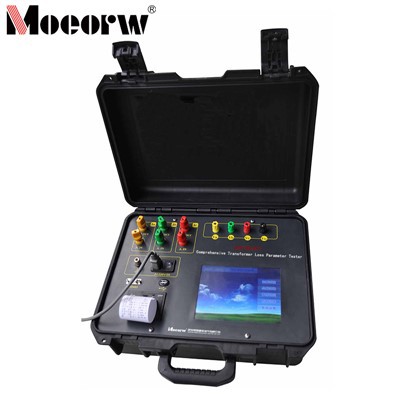
A relay protection tester, also known as a relay protection tester, utilizes a high-speed, high-performance digital signal processor. This processor boasts fast processing speed and wide transmission bandwidth, capable of generating a high-density fitted sine wave of 360 points per cycle for the fundamental frequency. This is the highest level among similar output methods. The waveform fidelity is high, with low distortion, especially in harmonic output, achieving a high density of 60 points D/A per cycle even for the 6th harmonic at 300Hz.
It is a new type of intelligent testing instrument. Previous tools mainly consisted of combinations of voltage regulators and phase shifters, which were bulky, inaccurate, and no longer met the requirements for modern microcomputer-based relay protection calibration. With the continuous development of science and technology, it has been widely used in various fields such as line protection, main transformer differential protection, and excitation control, and substation integrated automation has become mainstream.