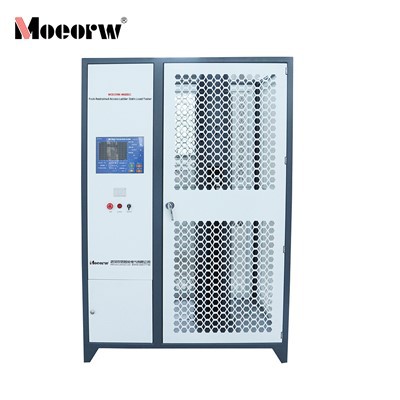
Product Introduction
Designed for power‑frequency hipot validation of live‑line protective gear, the MOEORW‑W383K integrated dielectric test bench streamlines routine lab assessments for insulating coveralls, rubber mats, insulating barriers and insulating blankets. Built in compliance with China power industry specification DL/T976‑2015, this consolidated testing workstation eliminates the need for scattered single‑function testers, cutting capital investment while delivering legally‑recognized test records for regulatory spot‑checks within power utilities.
Its unique soft composite electrode assembly adopts metal‑fiber woven fabric padded with fire‑retardant sponge. The conductive surface can closely conform to contoured PPE surfaces, avoiding surface scratches, indentations and material damage frequently caused by rigid metallic electrodes. It serves test labs, power‑supply corporations, third‑party inspection bodies and safety‑tool verification centers for insulating protective articles.
Product Parameter (specification)
Electrical Ratings
Maximum hipot test voltage: 50 kV
Bench Dimensions & Construction
Overall footprint: 1800 mm × 1300 mm × 800 mm
Tabletop finish: Brushed aluminium alloy
Full Electrode Kit Supplied
Insulating coverall electrode groups
Inner‑outer electrode sets for insulating sleeves
Matched inner‑outer electrodes for insulating shoulder capes
Single inner electrode for chest section testing
Paired inner‑outer electrodes for insulating trousers
Reinforced edge test sheets (4 pieces: three 150×100 mm, one 50×150 mm)
| Component | Dimension & Description |
|---|---|
| Ground base plate | Stainless‑steel worktop, 1300×1300×750 mm |
| Acrylic insulating sheet | 1270×1270×5 mm, hollow central aperture of 762×762 mm |
| Conductive sponge mat | 762×762×5 mm |
| High‑voltage aluminium electrode panel | 762×762×5 mm |
Insulating barrier surface‑test electrodes
Two metal test plates: 70 mm (L) × 30 mm (W)
Cylindrical electrodes for insulating blanket assessment
| Item | Geometry Parameters |
|---|---|
| Small cylinder | Φ25 mm, height 25 mm, edge radius 3 mm |
| Large cylinder | Φ75 mm, height 15 mm, edge radius 3 mm |
Product feature
Damage‑free pliable conductive electrodes Instead of hard metal plates, composite conductive cloth plus flame‑retardant sponge makes full surface contact with clothing‑style insulating PPE. Light misting over electrode surfaces optimizes heat dissipation during extended voltage‑holding cycles, preserving sample integrity throughout repeated dielectric trials.
Consolidated multi‑item test workstation One single bench completes four major test categories: insulating suit, insulating mat / blanket and insulating barrier hipot evaluations. Lab floor space and equipment procurement expenses can be greatly reduced by removing redundant discrete testers.
Robust, mobility‑oriented mechanical layout Full aluminium alloy framework fitted with lockable swivel casters supports convenient relocation and firm stationary positioning. Built‑in pull‑out drawers organize electrodes and high‑voltage cabling. A dedicated heavy‑duty grounding lug mitigates stray leakage risks during high‑voltage runs.
Full alignment with DL/T976‑2015 industrial protocol All testing workflows, hipot magnitude, voltage dwell duration and electrode placement strictly follow official preventive‑test codes for live‑working apparatus. Output test reports gain acceptance from grid‑run inspection authorities nationwide.
Segmented modular electrode architecture Partitioned electrode sets target chest, sleeves, trousers and shoulder sections of insulating suits; purpose‑built accessories serve mats, blankets and barriers. Regional segmented probing helps pinpoint local insulation defects that uniform large‑area electrodes may overlook.
Enhanced operator safety architecture Physically separated high‑voltage and ground circuits; removable top protective cover according to test requirements. Clear demarcated safety buffer zones lower flash‑over and electric‑shock hazards when voltage is applied.

Product Application
1.Grid‑affiliated safety‑tool verification labs: execute periodic 6‑month or 12‑month hipot screening for field‑deployed insulating protective equipment.
2.Power generation & distribution enterprises: in‑house preventive dielectric verification for live‑maintenance insulating coveralls, mats and barriers.
3.Third‑party power‑product quality‑assessment institutes: generate valid hipot evidence and formal reports for PPE manufacturing vendors.
4.Insulating‑PPE manufacturers: carry out outgoing factory quality inspection for finished insulating suits and blankets prior to shipment.
5.Heavy‑industry high‑voltage workshop safety departments: scheduled verification for insulating mats and protective garments deployed within plant distribution switch‑rooms.
Random Module: Standard Test Operation Flow (Insulating Suit Test)
Pre‑test setup: Secure the bench grounding terminal with certified ground cabling toward reliable earth connection and double‑check connection tightness. Lightly spray conductive‑cloth electrodes to boost thermal dissipation.
Sample wrapping: Fit inner electrode layers inside coverall / trouser / sleeve specimens and link inner electrodes to high‑voltage leads. Wrap outer conductive electrodes over sample outer surfaces. Keep ≥50 mm clearance distance between electrode edges and sample borders.
Position specimen: Lay wrapped sample flat on central tabletop; close upper protective cover to connect outer electrodes to bench ground circuit. Disconnect cover ground wire specifically for chest‑area testing.
Voltage‑ramping withstand trial: Confirm all wiring connections are secure before performing step‑up hipot procedure following standard‑specified voltage magnitude and hold‑time. For coveralls and trousers, test each anatomical segment separately.
Post‑test handling: Cut off high‑voltage supply, fully discharge test hardware, lift protective cover and retrieve test specimen. Record results: absence of flash‑over, dielectric breakdown and excessive heating equals pass status.
FAQ
Q1: Does this test bench comply with national power industry test standards?
A1: Yes. The whole test design, electrode size, withstand voltage parameters and test operation process fully follow DL/T976-2015 Live Working Tools Preventive Test Regulation. Test data and inspection records generated by this device are accepted by power grid inspection departments nationwide.
Q2: Will the conductive electrodes scratch or damage new insulating suits during testing?
A2: No. Different from rigid metal plates, our electrodes are made of soft conductive fiber cloth + flame-retardant sponge, which can closely fit the surface of insulating products without hard scratches, indentations or surface damage of test samples.
Q3: Can one machine test insulating suits, mats and barriers at the same time?
A3: Yes. This is an all-in-one multi-functional platform. Equipped with complete matched electrode sets for insulating suit, insulating mat/blanket and insulating barrier, you only need to replace corresponding electrodes according to different test items without purchasing multiple separate test tables.
Q4: Is the equipment easy to move and install in my laboratory?
A4: The test bench is equipped with 4 universal brake casters, which can be freely pushed to any test area and locked to fix position. The whole machine is pre-assembled before delivery, only grounding and high voltage wiring are needed on site, no complicated assembly work required.
Q5: What after-sales service can I get after purchasing?
A5: We provide 1-year full machine warranty, lifelong technical support and electrode spare parts supply. Our professional technical team can provide remote operation guidance, on-site installation training and test standard consultation services. The national unified customer service hotline 4000-177-185 is available for 7×12 hours consultation.
Q6: What is the judgment standard for qualified test samples?
A6: During the whole withstand voltage holding time, if there is no corona discharge, flashover, breakdown, obvious overheating or surface burn marks on the test sample, the product is judged qualified. Any above abnormal phenomenon means the insulating appliance fails the test.
Q7: What's the regular test cycle for different insulating products?
A7: 1. Insulating mat/blanket: test every 6 months; 2. Insulating suit, insulating trousers, insulating sleeve: test every 6 months; 3. Insulating barrier (surface & interlayer withstand voltage): test once per year, all cycles strictly implement DL/T976-2015 standard requirements.
Q8: Is the high voltage part of the equipment safe for operators?
A8: The platform adopts separated high voltage and ground loop design, with clear safety operation distance reminder. Operators must stand outside the safety isolation zone during pressurization test; the grounding circuit is independent and reliable to effectively avoid electric shock risk.
Hot Tags: insulating suit test device, China insulating suit test device manufacturers, factory, electric safety tools test equipment, electrical safety tool, Foot Buckle Step Board Static Load Tester, Fully Automatic Insulation Boots Withstand Voltage Test Device, Insulation Boots Withstand Voltage Test Device, Portable Servo Loading Device